


Grand Theft Auto: San Andreas
4.576.75K Reviews
App Specs
- Version
- 2.11.311
- Updated On
- License
- $6.99
- Downloads
- 5,000,000+
- Developer
- Rockstar Games
- Categories
- Action
- Platform
- Android, iOS
Screenshots

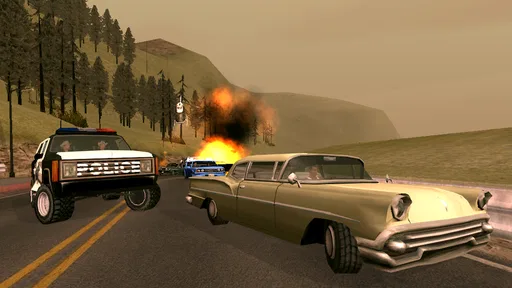
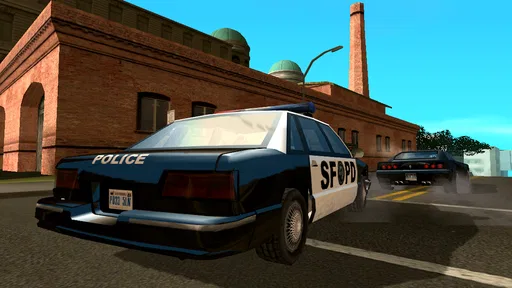
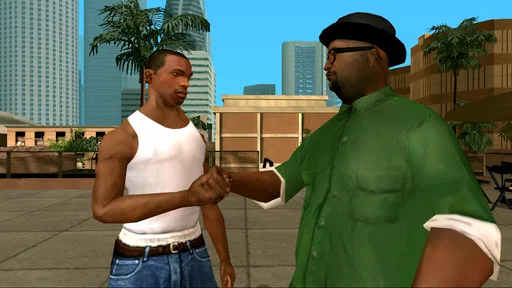
 Analysis by AppCompare
Grand Theft Auto: San Andreas is the kind of mobile game I return to when I want a substantial single-player action experience rather than a quick round that disappears after a few minutes. Rockstar Games brings its large open-world crime drama to phones and tablets, and the result still feels unusually ambitious for a game that can be carried in a pocket. I played it as both a story-driven adventure and a free-roaming sandbox, and that difference matters: the missions give the game direction, while the city itself supplies the temptation to ignore the next objective.
This is a premium release priced at $6.99, aimed at a mature audience with a Mature 17+ rating. It is not a lightweight arcade download, nor is it designed around short, disconnected sessions. The game asks for attention, patience, and a device that can handle a large 3D world. In return, it offers a long-form campaign, plenty of room to experiment, and a sense of place that most mobile action games do not match.
Why the opening hours still work on a touchscreen
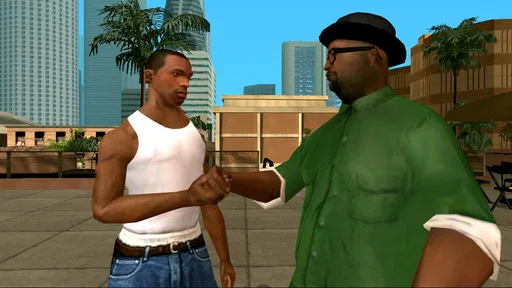
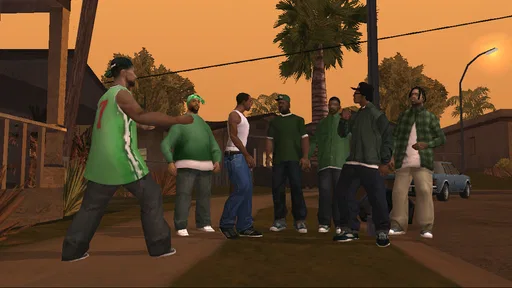
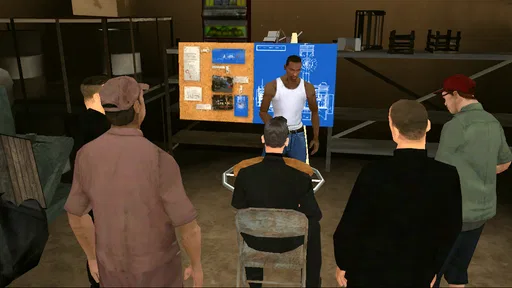
The early goals are clear without being overexplained. You step into the role of Carl “CJ” Johnson and are quickly pulled into the problems surrounding his return to Los Santos. Missions introduce the setting, the people around CJ, and the basic rhythm of driving, shooting, escaping, and exploring. I liked that the opening does not bury the player under a complicated menu structure. The next objective usually gives me a practical reason to move through the world, while the surrounding conversations provide the larger motivation.
That combination is important on mobile. When I have only a short break, I can follow the next mission marker and make visible progress. When I have more time, I can drive away from the objective and see what happens. The game does not feel like a corridor with decorative scenery around it. Los Santos, the countryside, and the other areas gradually become familiar spaces that I navigate from memory rather than simply passing through once.
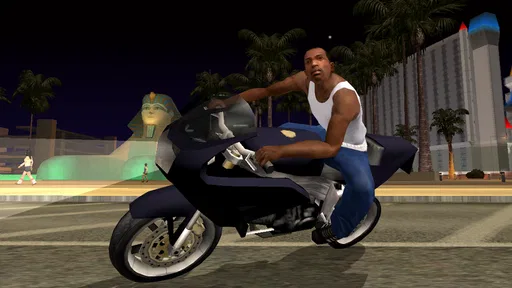
The first missions also establish an understated lesson about the game: preparation often matters more than rushing. A vehicle can make the difference between reaching a location comfortably and arriving in trouble. A poor approach to a firefight can turn a straightforward objective into a frustrating restart. I found myself checking the surroundings, choosing a useful car, and considering an escape route instead of treating every mission like a direct sprint toward a marker.
That is one of the better ways to play on a phone. Touch controls make hurried reactions less dependable than they are with a controller, so planning becomes a practical advantage. I would rather enter a difficult mission with a sensible vehicle and a calm approach than rely on last-second aiming while my thumbs are covering half the screen.
Progress is felt through the world, not just a completion bar
The most satisfying progress signal is not a number on a profile screen. It is the way the world opens up as the story moves forward. New places become relevant, familiar characters develop, and missions begin to feel connected rather than randomly selected. Even when I was not chasing a specific reward, I could tell that the campaign was building toward something because the relationships and locations kept changing.
Worth Reading Before You Choose

EA SPORTS FC Mobile 26 Is a Bigger Football Game, but It Takes Time

Flipboard Shows What News Apps Must Do Beyond the Feed

Switching to Android Auto Means Rethinking Your Driving Routine

Google Calendar Makes a Crowded Week Easier to Manage

Ludo King Makes the Most of the Minutes Between Plans

Baby Panda World Brings Quick Play to Modern Phones, but Its Game Library Feels Busy
There is also a strong sense of personal improvement. At the beginning, I was still adapting to the camera, driving, and touch-based aiming. Later, I understood how to position a car for a quick departure, how to use cover more effectively, and when it was smarter to break away from a fight than continue trading shots. Some of that improvement comes from the character’s growth, but a lot comes from my own familiarity with the controls and the map.
This makes returning to an unfinished save worthwhile. I am not merely collecting another identical stage. I am continuing a story while gaining a better understanding of how the game’s spaces connect. The campaign gives the freedom a purpose, and the freedom gives the campaign breathing room.
One useful habit is to treat safe moments as preparation windows. Before starting a mission, I often take a moment to make sure I am not beginning with an awkward vehicle or a poor position. That small pause reduces needless failures, especially during missions that become chaotic after the first objective. It also makes the game feel less like trial and error.
How the challenge curve treats mistakes
The difficulty is uneven in a way that feels typical of a large open-world action game. Some missions are immediately understandable, while others become demanding because several tasks are combined: driving under pressure, handling enemies, following a target, or escaping after the main objective. The problem is not always raw combat difficulty. Sometimes the challenge comes from controlling the situation when the game suddenly changes pace.
On a touchscreen, that curve is more noticeable. Driving is enjoyable once I settle into it, but precise turns and quick corrections can be less comfortable than with physical controls. A chase that would feel routine on a controller may require more concentration on a phone. Shooting has a similar trade-off: the game remains playable, but I have to be deliberate about camera movement and target selection rather than relying on frantic swipes.
I recommend using a larger screen when possible, particularly for longer sessions. A tablet does not change the game’s design, but it gives the interface and action more room to breathe. On a smaller phone, I prefer shorter mission attempts and a relaxed grip, because tension in my hands quickly makes touchscreen inputs less accurate.
Failure is most annoying when it follows a long sequence that offered no comfortable point to regroup. I learned to avoid beginning a difficult objective when I was tired or distracted. The game rewards attention, and it is not especially forgiving of casual multitasking during a complex mission. That is a limitation for anyone expecting a quick, low-commitment mobile experience.
Still, the challenge rarely feels pointless. When I failed, I could usually identify the cause: I approached too aggressively, missed an important turn, stayed exposed too long, or failed to think about what would happen after the objective. That clarity matters. A game can be hard without being satisfying, but here the difficulty often encouraged me to adjust my method.
What keeps the campaign moving after the novelty fades
The retention pressure comes mainly from curiosity and momentum rather than a need to check in every day. I wanted to see how the story developed, how the different areas connected, and what the next mission would demand. That is a healthier reason to keep playing than a constant stream of reminders. The game works particularly well for people who like having a clear long-term goal but still want the option to wander.
There is a useful tension between structure and distraction. I might start the session intending to complete one story mission, then spend time driving through a familiar neighborhood, looking for a better route, or simply causing trouble before returning to the campaign. That freedom can slow the story, but it also prevents the world from feeling like a sequence of isolated tasks.
On the other hand, players who need frequent new rewards may find the pacing less immediate. This is not built around a constant parade of unlock screens or rapid-fire progression prompts. The payoff is slower and more narrative. The game expects me to invest in the journey, remember characters, and appreciate how the setting changes over time.
That distinction helps explain why the game has remained relevant on mobile. It is not competing with a five-minute puzzle or a quick multiplayer match on the same terms. Its appeal is closer to carrying a console-style campaign around, with the convenience of playing in smaller pieces when necessary. I found that a single mission could fit into a short break, but the overall experience is much better when I occasionally give it a longer, uninterrupted session.
Saving is another practical consideration for mobile play. I prefer to finish a clear objective before putting the device away rather than stopping in the middle of a complicated sequence. That habit keeps the campaign easier to follow and reduces the feeling that I have returned to an unfinished problem without remembering what I was doing.
Where the mobile version fits among action alternatives
Compared with smaller mobile action games, this release offers far more environmental variety and a stronger sense of a continuous journey. Many alternatives are easier to pick up, simpler to control, or better suited to a quick burst of play. They may be the better choice if I want instant action without learning a large map or following a lengthy story.
Compared with playing an open-world action game on a console or computer, the obvious advantage is convenience. I can continue the campaign away from the television or desk. The trade-off is control comfort. Touch input is serviceable, but it does not provide the same physical precision as a controller, especially during demanding driving and shooting sections.
The game also differs from free-to-play action titles in how I approach it. The initial price creates a clearer expectation: I am buying access to a substantial experience rather than entering a loop designed around repeated spending. The listing also shows in-app purchases at $6.99 per item, so I would still advise checking the purchase screen carefully before confirming anything. For me, the premium entry point is easier to understand than a game that constantly interrupts play with competing offers, but the cost makes it sensible to consider whether I will actually commit to the campaign.
Device compatibility is worth checking before buying. The minimum operating system is iOS 9, and the current version is 2.11.311. Those details make the game accessible to a broad range of supported Apple devices, but compatibility alone does not guarantee an equally comfortable experience on every screen size. I would choose a device with enough storage and a strong battery condition, because a large 3D game is more demanding than a simple action app.
Who should play it, and who should skip it
I would recommend this game to someone who enjoys story-led action, open-world exploration, driving, and the freedom to approach a situation in more than one way. It is especially good for a player who wants a substantial campaign that can be paused between missions and revisited over time. The Mature 17+ rating is also important: this is not a family-friendly crime adventure, and parents should treat that label as a real guide rather than a minor formality.
I would be more cautious recommending it to someone who dislikes touch controls, has little patience for mission restarts, or wants every session to deliver a quick, self-contained reward. Players who mainly enjoy competitive multiplayer may also prefer a game designed around live matches rather than a solo campaign. This release’s strengths are its world, story, and freedom, not instant social competition.
A realistic everyday use case is a commute or waiting period where I have enough time for one mission but not enough for a full evening. I can load the game, complete an objective, and stop at a sensible point. On a weekend, I can instead follow the story for longer and let exploration take over. That flexibility is one of its strongest mobile qualities, provided I accept that the controls and pacing sometimes demand more focus than a typical phone game.
My verdict on goals, unlocks, and long-term pacing
Grand Theft Auto: San Andreas sustains play because its goals keep widening. The early missions teach me how to inhabit the world, later progress makes the setting feel larger and more connected, and the challenge encourages better planning rather than simple repetition. The pacing is not perfectly smooth, and touchscreen controls can make certain sequences harder than they need to be, but the underlying campaign has enough variety and personality to carry the experience.
The game has earned a 4.5 average from around a million ratings, with over five million installs, which matches my impression that this is a well-established mobile action release rather than a disposable port. Rockstar Games has preserved the scale that makes the original appealing, while the mobile format adds convenience at the cost of some control precision.
At $6.99, I see it as a worthwhile purchase for players who will treat it like a full adventure instead of a casual time filler. I would not buy it for a few random minutes of action or expect it to feel as effortless as a purpose-built touchscreen game. But if I want a crime story with a large world, meaningful forward movement, and enough freedom to create my own detours, this remains one of the stronger choices in mobile action. My final advice is simple: use a comfortable screen, plan difficult missions instead of rushing them, and give the story enough time to build. That is when the game’s long-term progression makes the most sense.
Pros
- Huge open-world map with varied cities
- countryside
- and activities.
- Deep storyline featuring memorable characters and multiple missions.
- Extensive vehicle selection
- including cars
- bikes
- boats
- planes
- and trains.
- Character customization includes clothing
- hairstyles
- tattoos
- and physical fitness.
- Offline play lets you enjoy the full campaign without an internet connection.
Cons
- Large download size can consume significant storage space.
- Touchscreen controls may feel awkward during precise driving or shooting.
- Some missions have dated difficulty spikes and frustrating objectives.
- Older visuals and animations may look rough on modern high-resolution devices.
- Performance can vary across devices
- especially during busy scenes.
FAQs for Grand Theft Auto: San Andreas
What is Grand Theft Auto: San Andreas about?
Grand Theft Auto: San Andreas is an open-world action game set in the fictional state of San Andreas, inspired by California and Nevada. You play as Carl “CJ” Johnson, who returns to Los Santos after a family tragedy and becomes involved in gang conflicts, corruption, crime, and personal revenge. The game combines a long story campaign with driving, shooting, exploration, side activities, and character customization.
Can Grand Theft Auto: San Andreas be played offline on Android or iOS?
Yes, the mobile version is primarily designed for offline play after the game has been installed and any required initial files have been downloaded. An internet connection may still be needed for downloading the application, checking the store license, updates, or restoring purchases. The game does not require a constant online connection for its main single-player story, but available features can vary depending on the device and operating system.
What devices are compatible with Grand Theft Auto: San Andreas?
Compatibility depends on the Android or iOS version, device hardware, available storage, and the specific edition offered in the official store. Because San Andreas is a large 3D game, older phones and tablets may experience slower loading, reduced graphics quality, overheating, or occasional performance issues. Before downloading, check the official Google Play or App Store listing for current system requirements and supported devices.
Does Grand Theft Auto: San Andreas contain in-app purchases or advertisements?
The official mobile release is generally sold as a premium game rather than offered as a free download supported by regular advertising. However, store pricing, editions, promotions, and optional account-related services can change over time. It is safest to download only from the official Google Play Store or Apple App Store, review the purchase information carefully, and avoid unofficial modified versions that may contain malware or unwanted charges.
How much storage space and device performance does the game require?
Grand Theft Auto: San Andreas requires considerably more storage than a typical mobile game because it includes a large map, cinematic story, voice acting, music, vehicles, missions, and detailed 3D environments. You should keep extra free space available for installation and updates. A modern device with sufficient RAM and a capable processor will provide smoother driving, fewer loading delays, and more stable graphics than an older budget phone.


